
By Lorina B.
Malcolm James McCormick, also known as Mac Miller, was an American rapper and producer from Pittsburgh and one of the most important artists of our generation.
Throughout his career, Mac built a universe of alter egos that helped him explore himself.
Easy Mac
Before the aliases, there was Easy Mac, who debuted his first-ever public full mixtape, But My Mackin’ Ain’t Easy, in 2007 at the age of 15. In a later interview, Mac recalled being approached by a Canadian rapper claiming the name, “I’m the real Easy Mac” he said. Mac, who was never fond of the name, simply laughed it off and said, “Take it, man.”
Mac Miller
Mac Miller became the name the world came to know. With early cheerful and upbeat projects like K.I.D.S. and Best Day Ever to projects like Swimming and Circles, Mac evolved into a vessel for emotional growth. But as Mac matured, so did the pressure. His debut studio album Blue Slide Park went No.1, but critics dismissed it. He later admitted that the hate pushed him toward drug use and creative experimentation.
This need for new forms led to his first identity splits.
Some devil with a pitchfork keep talking like he know me.
-Mac Miller, Desperado
Larry Lovestein & The Velvet Revival
In a bold departure from rap, Mac created Larry Lovestein, a singer who fronted an imaginary jazz band called The Velvet Revival. In 2012, he dropped You, a five-track EP that sounded nothing like his earlier work.
This shift was unexpected, but it hinted at the jazz and soul influences he would explore more fully in The Divine Feminine and Swimming.
Delusional Thomas
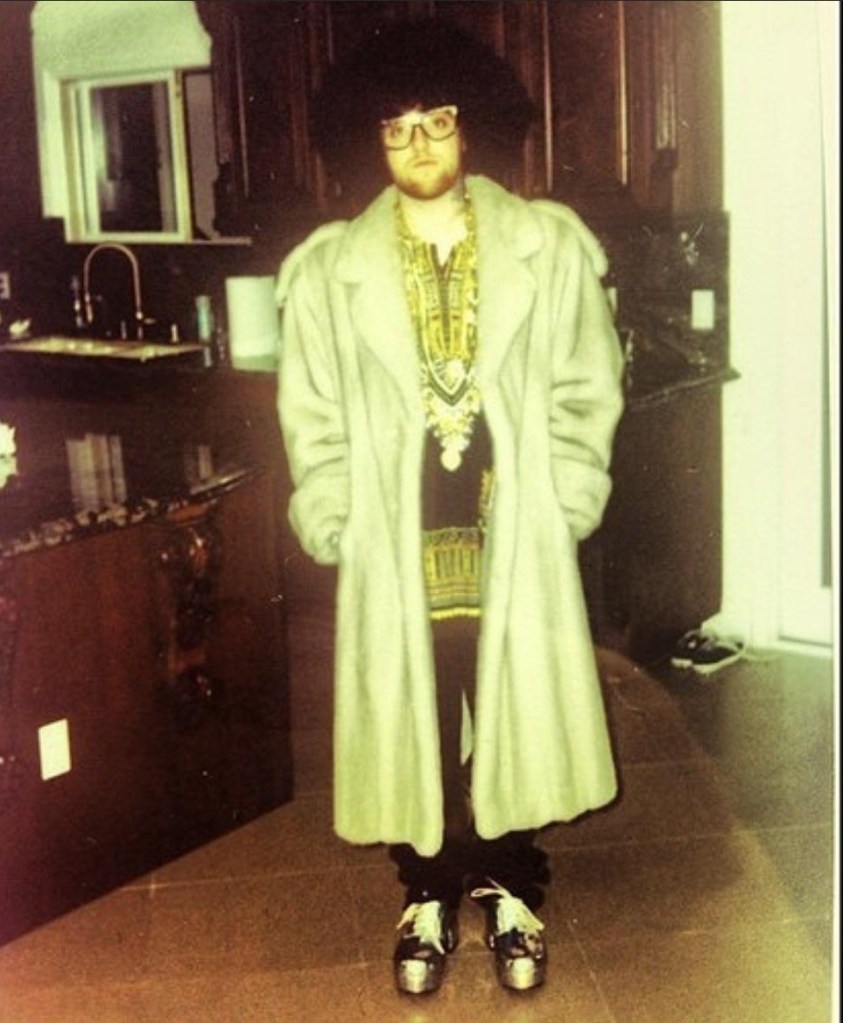
The following year, Mac went in the complete opposite direction by creating Delusional Thomas.
Possibly the most shocking of his personas, Delusional Thomas was originally conceived as a “devil-on-the-shoulder” figure, a way for Mac to express the darkest parts of his psyche without filter. The voice first appeared on Watching Movies With the Sound Off ,but it was the self-titled tape that gave the character a life of his own. Delusional Thomas would resurface in later works like Faces, Balloonerism and even on Ab-Soul’s These Days….
Much of the Delusional Thomas tape was produced by Larry Fisherman.
Larry Fisherman
Larry Fisherman was his producer alter ego, who produced music not just for himself but also for others, such as Vince Staples, SZA, Ab-Soul, and Earl Sweatshirt. As Larry Fisherman, he released two instrumental tapes, Run-On Sentences, Volume One and Run-On Sentences, Volume Two he also entirely produced the collaborative mixtape Stolen Youth with Vince Staples.
Larry Dollaz
While Larry Fisherman was Mac Miller’s most prominent and prolific producer alias, he wasn’t the only one.
Before adopting that name, he used Larry Dollaz, which was officially credited on just one track,PlaneCarBoat in 2012, though a few other instrumentals from that era likely came from him as well.
Parson Brown
Later, in 2018, Mac quietly debuted a third producer alias, Parson Brown, credited on tracks like Buttons and Dunno. What Mac had planned for Parson Brown remains unknown, as he sadly passed away just three months after the character’s debut.
Beyond his music-related alter egos, Mac occasionally used one-off names that were not developed into personas, such as Lars and Cam Rellim.


What makes Mac so unforgettable is the different sides he wasn’t afraid to show. Those explorations gave us the “Most Dope” artist. We may never fully understand where those paths would lead, but we’re lucky to have witnessed them.
Thank you, Mac.